The Habit of Living Ahead of Ourselves
I have been a Reiki Ryoho practitioner for the better part of three decades, and if there is one thing I have learned in that time, it is this: worry is stubborn. It does not respond to logic. It does not respect how much you know, how long you have practiced, or how deeply you understand the precepts. It shows up anyway, pulling your attention away from the present moment and into imagined outcomes, rehearsed disappointments, and futures that may never arrive.
You probably know the feeling. Your shoulders creep up toward your ears. Your breath goes shallow. Your mind starts looping through scenarios, each one worse than the last. And the strangest part? It feels useful. It feels like staying mentally busy is the same thing as being prepared, like running through every possible outcome is a form of responsibility.
But it is not. Most of the time, worry does not create clarity. It creates contraction. It narrows your field of awareness until you lose the context of what is actually happening right now, in this moment, right in front of you.
This is where the second precept of the Gokai meets us. “Do not worry.” In Japanese, the phrase is shinpai suna — and it is not a scolding. It is a compassionate instruction to set down the burden of anxious anticipation. It does not pretend that life is free of uncertainty. It offers a way to stand peacefully inside that uncertainty without letting it consume you.
“Just for Today” as the Method
Each of the five precepts of the Gokai — given by Usui Mikao, the founder of Usui Reiki Ryoho — begins with the same two words: kyo dake wa, “just for today.” I have always found that framing remarkable. It does not say “forever.” It does not say “never worry again.” It says just for today.
That small phrase keeps the teaching grounded and human. You are not being asked to master all of life at once. You are not being asked to eliminate every anxious thought for the rest of your days. You are being asked to return to the present moment — just for today — where clarity is possible and peace can actually be felt.
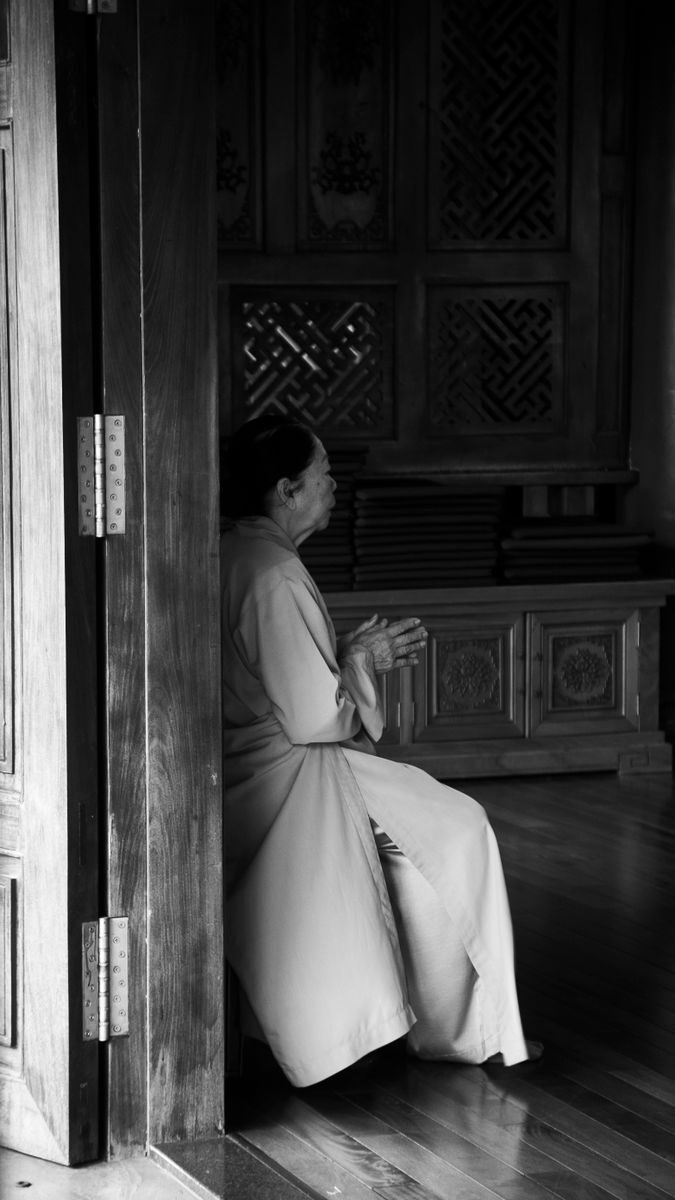
In my practice, I recite the Gokai each morning and evening in gassho, hands held together before the heart. It is not memorization for its own sake. It is a practice of return. Every time I place my hands together and speak those words, I am anchoring myself in the present and reminding myself of what matters most. The power of the precepts does not come from admiring them. It comes from repetition, reflection, and application — from living them, day after day.
“Just for today” tells us we only need to practice this for one day. Tomorrow, we begin again. And honestly, I find that deeply reassuring.
What “Do Not Worry” Is Not
Before I talk about what this precept invites, I want to be clear about what it does not ask of us, because I have seen these misunderstandings trip up students more times than I can count.
It is not denial. “Do not worry” does not mean pretending that difficulties do not exist or that challenges will never come. Life contains genuine hardship. Recognizing that is not a failure of your practice — it is honesty.
It is not suppression. The precept does not ask you to push anxious thoughts underground or to shame yourself when worry shows up. I have tried that approach, and I suspect you have too. It does not work. Suppressed emotion does not disappear. It waits, and it comes back with more force.
It is not passivity. “Do not worry” is not an instruction to stop caring, stop planning, or stop acting. It is not resignation. It does not ask you to become emotionally flat or indifferent to your life.
What it does ask is something more subtle and, I think, more courageous: to notice when your mind has wandered off into imagined futures, and to gently bring it back. That is all. Not to banish the thought, but to notice it and return.
Worry Versus Wise Concern
This is the distinction I come back to most often in my own practice and in my teaching, and it is the one I want you to take away from this article if you take away nothing else.
Worry loops. It rehearses outcomes you cannot control. It replays conversations that have not happened yet. It keeps your mind busy without moving you a single step toward action. Worry feels productive, but it produces nothing except tension. It narrows your awareness until the present moment disappears entirely beneath layers of anticipation.
“The mind is a wonderful servant, but a terrible master.”
Wise concern is different. It recognizes a situation that needs attention and actually responds to it. It asks a simple question: is there something I can do about this right now? If the answer is yes, it moves into action. If the answer is no, it lets the thought rest. It trusts that the right moment to act will reveal itself when it arrives. Wise concern is grounded and present. It does not spiral. It does not contract. It meets the situation and responds.
The second precept does not ask you to stop caring. It asks you to notice the difference between caring wisely and spiraling mentally — and to choose the former whenever you can.
How Reiki Ryoho Helps Us Practice It
One of the things I treasure about Reiki Ryoho is that it does not just hand you a precept and walk away. It gives you tools to practice it.
The daily recitation of the Gokai in gassho is one of those tools. Each morning and evening, when I place my hands together and speak the precepts, I am not performing a ritual. I am practicing return. I am anchoring myself in the present and reminding myself of what matters. Over the years, that practice has become a kind of anchor I can drop at any moment, not just morning and evening.
The body is a teacher too. When worry takes hold, the body responds before the mind catches up. Your shoulders tighten. Your breath goes shallow. Your jaw may clench. Through Reiki Ryoho, we learn to notice these signals. We learn to feel the difference between a mind at rest and a mind in contraction. That awareness is the first step toward release. When you notice the physical signs of worry, you can pause. You can breathe. You can return — not by forcing the thought away, but by letting it pass through without taking root.
Over time, something builds. Think of it as a kind of internal muscle. The gap between a worrisome thought and your reaction to it grows a little wider. In that gap, you find something precious: choice. You find the space to ask whether this thought deserves your attention, or whether it is just your mind doing what minds do when left unsupervised.
A Practice for the Day
When I teach this precept, I give students a simple question to carry with them. When you notice worry creeping in, ask yourself:
Is this something I can act on right now?
If there is a clear next step, take it. Send the email. Make the call. Have the conversation. Action dissolves worry more effectively than any amount of mental rehearsal ever could.
If there is no clear next step — if the concern is about something outside your control, or something that has not happened yet — let the thought rest. I do not mean dismiss it. I mean acknowledge it, set it down, and bring your attention back to the present. You can return to it later if you need to. Most of the time, you will find it has lost its urgency by then.
I also want to encourage you to have a gentle relationship with this precept. “Do not worry” is not a command to be perfect. It is an invitation to return, again and again, to the present moment. Every return strengthens your practice. Every pause creates a little more space between fear and reaction.
A Daily Practice of Freedom
What I appreciate most about “just for today” is its realism. It does not ask for a lifetime of certainty. It asks for one day. That is all. And that is what makes it both attainable and wise. We are given permission to meet the day as it is, rather than as our fear imagines it to be.
In that way, “Do not worry” can give us something unexpected: a sense of freedom. It reminds us that peace is not the absence of challenge, but the refusal to let challenge occupy the whole of our awareness. Trust, in this context, does not mean everything will unfold exactly as we want. It means we no longer need to carry tomorrow in our hands today.
When the mind is not overwhelmed by imagined futures, it becomes easier to respond to what is right in front of us. Intuition, presence, and appropriate action become available again. “Do not worry” is not passive. It is active, disciplined, and quietly courageous.
When I recite, “Just for today, I do not worry,” I hear an instruction and a blessing at the same time. I am reminded that today is enough, and that the present moment is where healing begins.